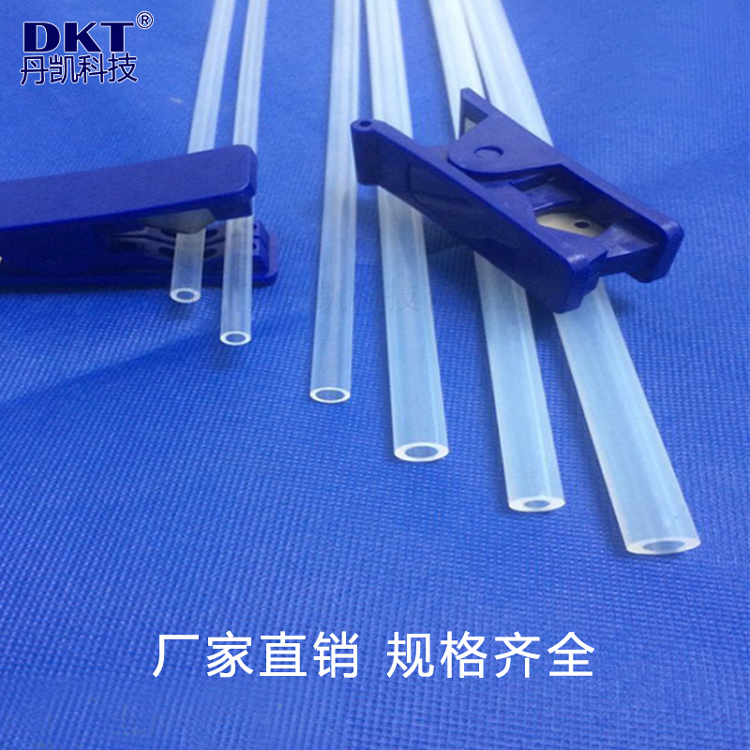
The production of polytetrafluoroethylene has solved many problems in the fields of chemical industry, petroleum, pharmacy and so on. PTFE seals, gaskets, gaskets. PTFE seals, gaskets, sealing gaskets are the choice of suspension
Polymerized polytetrafluoroethylene resin is molded and processed. Compared with other plastics, PTFE has the characteristics of chemical resistance, it has been widely used as a sealing material and filling material.

Figure 1: PTFE rod Source: Dankai
Characteristics of PTFE:
High temperature resistance-the working temperature can reach 250 ℃.
Low temperature resistance-has good mechanical toughness; even if the temperature drops to -196 ℃, it can maintain 5% elongation.
Corrosion resistance-for most chemicals and solvents, showing inert, strong acid, alkali, water and various organic solvents.
Weather-resistant-has the best aging life in plastics.
High lubrication-is the lowest coefficient of friction in solid materials.
No adhesion-is the smallest surface tension in a solid material and does not adhere to any substance.
Non-toxic-physiologically inert, as a long-term implantation of artificial blood vessels and organs without adverse reactions. PTFE itself is not toxic to human body, but the raw materials used in the production process
Ammonium perfluorooctanoate (PFOA) is thought to have a possible carcinogenic effect.
Chemical resistance-has excellent chemical stability, corrosion resistance; is one of the best corrosion resistance materials in the world today, in addition to molten metal sodium and liquid fluorine, can withstand all other chemicals, in
The boiling in aqua regia does not change, and is widely used in various devices that require anti-acid, alkali and organic solvents.
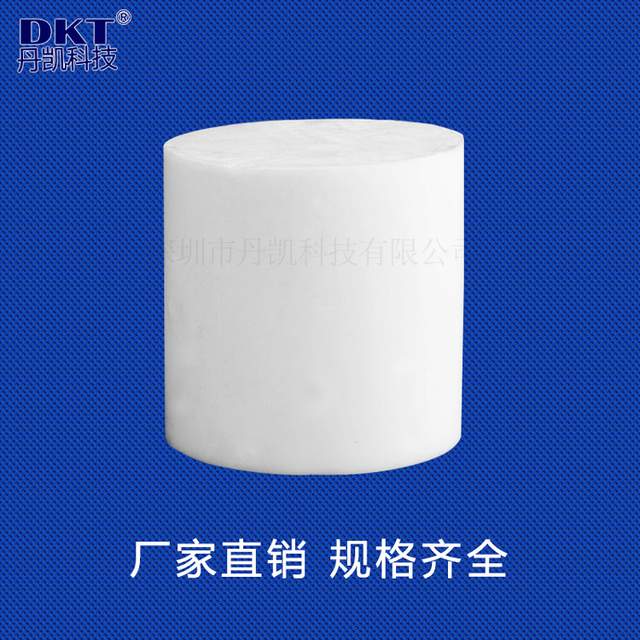
Figure 2: PTFE Gasket Source: Dankai
Next, the basic parameters of PTFE are introduced.
1. chemical properties
Weather resistance aging: long-term exposure to the atmosphere, its media performance remains unchanged radiation resistance and low permeability;
Flame retardancy: limiting oxygen index below 90, using temperature -55~260 ℃;
Acid and alkali resistance: it is insoluble in strong acids, strong alkalis and organic solvents;
Oxidation resistance: It can resist the corrosion of strong oxidants.
2. physical properties
Mechanical properties:
PTFE medium is non-viscous, and the friction coefficient is very small, only 1/5 of polyethylene. PTFE can still maintain good mechanical properties in a large temperature range of -55~260 ℃.
Excellent chemical and weather resistance:
PTFE is resistant to almost all hydraulic media, solvents and various chemical media, except for molten alkali metals. For example, it can be boiled in concentrated sulfuric acid, nitric acid, hydrochloric acid, or even in aqua regia.
There is no change in the amount and performance, only slightly soluble in all alkanes at a temperature above 300 ℃. PTFE does not absorb moisture, zero flame retardant, anti-oxygen, UV are very stable, so it has excellent weather resistance.
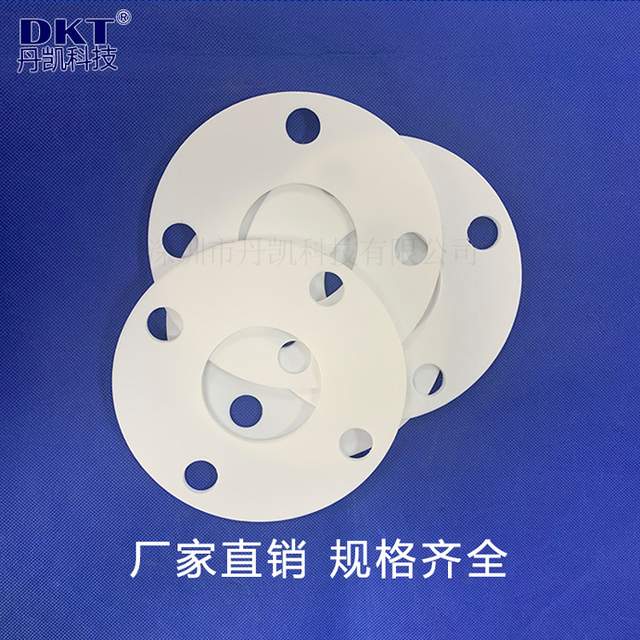
Figure 3: PTFE Gasket Source: Dankai
Electrical properties:
PTFE has low dielectric constant and dielectric loss over a wide frequency range, and high breakdown voltage, volume resistivity and arc resistance.
Radiation resistance:
The radiation resistance of PTFE seals is poor, and the degradation caused by high-energy radiation, the electrical and mechanical properties of the polymer are significantly reduced.
Aggregation:
Polytetrafluoroethylene is produced by radical polymerization of tetrafluoroethylene. Industrial polymerization is carried out with stirring in the presence of a large amount of water to disperse the heat of reaction and to facilitate temperature control. available inorganic
Persulfates and organic peroxides are initiators, and redox initiation systems can also be used.
This article is originally created by Teflon's little sister. Welcome to pay attention and take you to grow knowledge together!