PTFE, PFA, FEP, PVDF Fluoroplastic products industry experts

How does Teflon casing test? How does Teflon trachea pack and transport?
Classification:
Company Dynamics
Author:
Source:
Release time:
2024-05-05
Visits:
how much a kilo of 1. teflon?
Teflon, or polytetrafluoroethylene (PTFE), is a high-performance fluoroplastic, and its price varies depending on many factors. The following is a brief analysis of the price composition of Teflon materials:
Raw material quality: different grades of PTFE resin, such as ordinary grade, food grade, medical grade, etc., there are obvious differences in the price. high quality raw materials are more expensive due to stricter control of impurities in the production process.
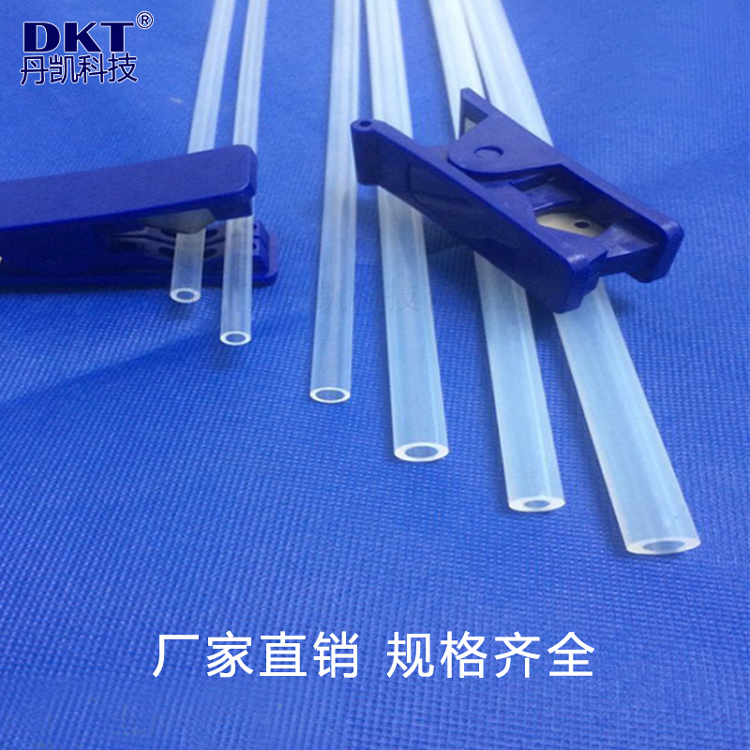
Product form: Teflon material can be made into plate, bar, pipe, film, powder and other forms, each form of processing difficulty, cost is different, the price is naturally different. For example, the price of finished products such as Teflon tubing and trachea is usually higher than that of raw material powder.
Market supply and demand: Macroeconomic factors such as global PTFE production capacity distribution, market demand fluctuations, and raw material prices (such as fluorite powder) will affect the market price of Teflon materials. When supply exceeds demand, prices may rise; conversely, when supply exceeds demand, prices may fall.
Procurement channels: direct procurement from manufacturers, through agents or from the second-hand market, the price difference is significant. Usually, the factory direct price is more transparent, and the agency or second-hand market may have bargaining space.
2. teflon casing how to test?
The quality inspection of Teflon casing mainly includes appearance inspection, size measurement, performance test and other steps:
Appearance inspection: observe whether the surface of the casing is flat and smooth, without obvious scratches, dents, bubbles, impurities and other defects. The color shall be uniform and in accordance with the requirements of the order.
Dimension measurement: use caliper, thickness gauge and other tools to measure the inner diameter, outer diameter, wall thickness and other dimensions of the casing to ensure that it conforms to the drawings or standards, and the tolerance is controlled within the allowable range.
Performance test:
Temperature resistance: Through the thermal aging test, check the performance change of the casing after long-term use at the specified high temperature.
Chemical resistance: select representative corrosive medium and carry out immersion test to observe whether the casing is dissolved, softened or discolored.
Mechanical strength: conduct tensile, bending, compression and other mechanical performance tests to evaluate the tensile strength, elongation at break, hardness and other indicators of the casing.
Electrical insulation: Measure the electrical properties such as volume resistivity, surface resistance and dielectric strength of the casing to ensure that it meets the requirements of electrical insulation applications.

how 3. teflon trachea packaging and transportation?
Teflon trachea, also called Teflon trachea, its packaging and transportation follow the following principles:
Protective packaging: use moisture-proof, shockproof and anti-static packaging materials, such as bubble film, pearl cotton, anti-static bags, etc., to wrap the air pipe to prevent damage caused by collision, extrusion or humidity changes during transportation.
Fixation and separation: for long pipes or large quantities of air pipes, pipe racks, trays, partitions and other methods should be used to prevent friction and winding between pipes and ensure the stability of pipes during transportation.
Clear identification: The product name, specification, quantity, production date, batch number, manufacturer information, precautions and customer order information are clearly marked on the outer packaging to facilitate quick identification and acceptance by the consignee.
Compliance transportation: comply with national and international logistics regulations, select appropriate transportation methods (such as land transportation, sea transportation, air transportation, etc.), and ensure that dangerous goods (such as gas pipes containing special gases) are properly packaged, marked and declared in accordance with relevant regulations. If necessary, provide relevant documents such as MSDS (Material Safety Data Sheet).
This article is originally created by Teflon's little sister. Welcome to pay attention and take you to grow knowledge together!
Key words:
Previous Page


Dankai Technology
Address: Area B, 4th Floor, Building 1, North Yongfa Science and Technology Park, Yanchuan North, Chaoyang Road, Songgang Town, Bao'an District, Shenzhen, China
Tel: +86-755-29979617 23127719 23127819
E-mail: dkt@szdankai.com

Focus on us
Copyright©2024 All rights reserved of Shenzhen Dankai Technology Co., Ltd.