PTFE, PFA, FEP, PVDF Fluoroplastic products industry experts

Briefly describe the types of PFA pipes, thermal cycling applications and installation methods.
Classification:
Company Dynamics
Author:
Source:
Release time:
2024-06-27
Visits:
PFA pipeline, all known as perfluoroalkoxy polymer pipeline, with its excellent high temperature resistance, corrosion resistance, high insulation and other characteristics, plays an important role in many industrial fields. The following will explain in detail the kind of PFA pipe, the concept of thermal cycle pipe and its installation method.
1. types of PFA pipeline
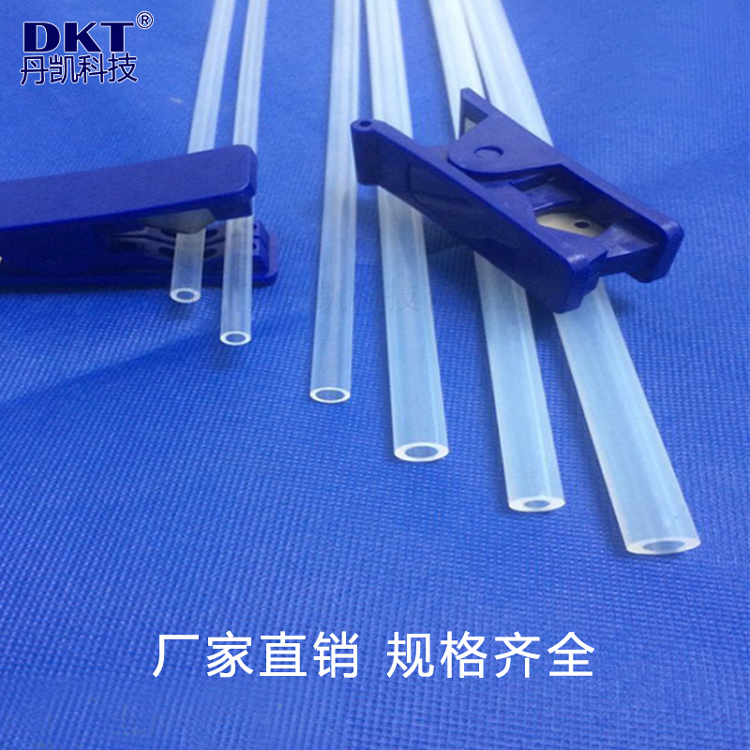
According to the different uses and structures, PFA pipes mainly have the following types: seamless pipe, welded pipe, corrugated pipe and transparent pipe. Seamless pipe has excellent integrity and sealing, suitable for high pressure, high purity fluid transmission; welded pipe welded by a special process, high strength and can withstand greater pressure; bellows because of its flexibility and scalability and commonly used to compensate for equipment displacement or vibration absorption; transparent PFA tube is easy to observe the internal medium flow, common in laboratories and special chemical processes.
2. PFA Thermal Cycling Piping
This is a piping system designed to meet the needs of fluid transportation in extreme temperature changes. Because PFA materials have strong high and low temperature resistance and thermal stability, they can still maintain good mechanical properties and anti-aging ability when undergoing repeated thermal cycles. Therefore, PFA thermal cycle pipes are widely used in heat exchange systems in chemical production, ultra-pure water transportation in semiconductor manufacturing, and various process pipelines that require frequent heat treatment operations.

3. how the PFA pipe is installed.
The installation of PFA pipes must follow strict operating procedures to ensure its full performance and extend its service life. First of all, special tools should be used when cutting the pipeline to avoid burrs and ensure that the incision is straight. Then, the connection is made by hot air welding or butt welding to ensure the tightness and strength of the interface. For the fixed link, it is not suitable to use rigid fasteners to directly squeeze the pipe, so as not to damage its inner wall, you can choose a special flexible clamp or bracket to support and position. At the same time, the entire installation process should avoid contamination and ensure that the inside of the pipeline is clean to meet its strict requirements for clean fluid transportation.
To sum up, PFA pipe has become an ideal choice for many industrial fields due to its diversified types and excellent heat cycle resistance. The scientific and reasonable installation method is the key to play its full effectiveness.
This article is originally created by Teflon's little sister. Welcome to pay attention and take you to grow knowledge together!
Key words:
Previous Page


Dankai Technology
Address: Area B, 4th Floor, Building 1, North Yongfa Science and Technology Park, Yanchuan North, Chaoyang Road, Songgang Town, Bao'an District, Shenzhen, China
Tel: +86-755-29979617 23127719 23127819
E-mail: dkt@szdankai.com

Focus on us
Copyright©2024 All rights reserved of Shenzhen Dankai Technology Co., Ltd.