PTFE, PFA, FEP, PVDF Fluoroplastic products industry experts

An article to read ePTFE pipe: performance characteristics, common specifications and its wide application
Classification:
Company Dynamics
Author:
Source:
Release time:
2024-03-10
Visits:
Introduction to 1. ePTFE
Expanded polytetrafluoroethylene (ePTFE) is a special polymer material, which is evolved from pure polytetrafluoroethylene through a series of special treatment processes. Specifically, it is through stretching, expansion and orientation processes, so that the original solid dense PTFE inside the formation of a small hole structure like a three-dimensional network. The ePTFE treated in this way has many new advantages: it is light in weight, and at the same time can effectively waterproof and breathable; it is not afraid of chemical substances, is very friendly to the organism, and performs well in terms of mechanical properties. Simply put, the original material becomes both lightweight and durable, but also to adapt to a variety of harsh environmental conditions.
Introduction of 2. ePTFE Pipe
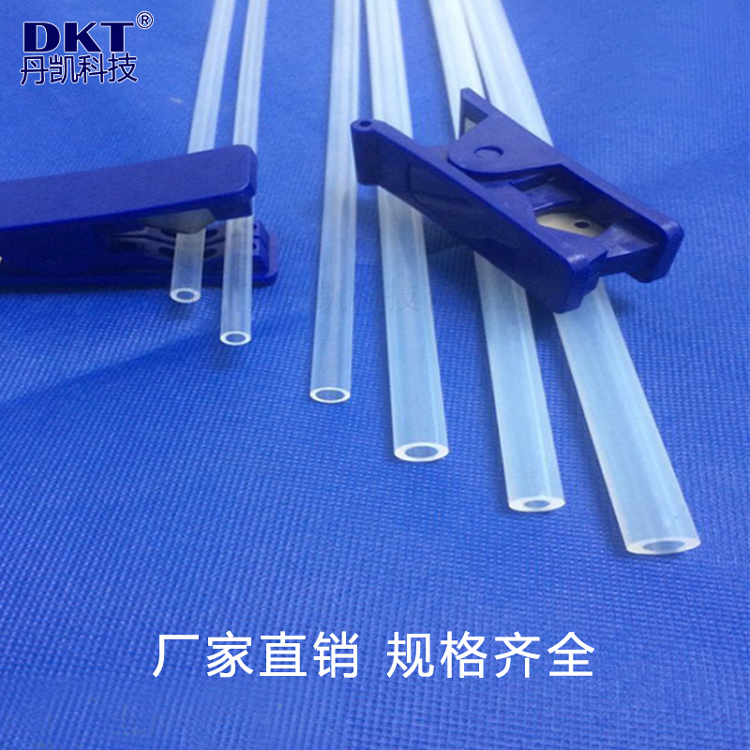
ePTFE tubing is a pipe product made of a special expanded PTFE material. It has many small holes inside, which allows ePTFE tube to retain the super chemical stability and high temperature resistance of traditional PTFE materials, but also adds several unique advantages: it can be breathable but not permeable, that is to say, gas can pass through but liquid can not; The tube is flexible and easy to bend. And its permeability can also be adjusted and controlled as needed.

3. ePTFE tubing applications
1. Medical use: In cardiovascular surgery, ePTFE material is used to make vascular substitutes or catheters, because it can not only ensure the smooth flow of blood, but also effectively prevent thrombosis. In addition, it is also suitable for drug delivery systems, which can accurately control the slow release of drugs to the target area.
2. Industrial applications: The chemical and semiconductor industries choose ePTFE as a pipeline for transporting ultra-pure fluids, mainly because of its excellent chemical resistance and precise control of gas and liquid permeability.
3. Outdoor equipment and protective clothing manufacturing: the waterproof and breathable layer in high-performance clothing adopts ePTFE membrane technology, which enables the wearer to keep the body dry and effectively discharge sweat.
4. Scientific research and bioengineering: ePTFE is used as a scaffold material for tissue engineering because of its good biocompatibility and conducive to cell attachment, which helps to promote tissue regeneration.
Common specifications of 4. ePTFE tubing
ePTFE pipe specifications can be customized to adapt to different use scenarios, the main specifications include:
1. Inner diameter size: a wide range from small to large, from a few millimeters to tens of millimeters, to meet different flow requirements of the conveying system.
2. Wall thickness design: According to the required strength, flexibility and functional requirements, the wall thickness can be as thin as tens of microns, or as thick as a few millimeters.
3. Length cutting: according to the actual needs of users, can be customized at any length, flexible to adapt to various installation conditions.
4. Micropore size and distribution: In order to meet different filtration accuracy, gas exchange efficiency or liquid permeability requirements, the pipe micropore diameter and its uniformity can be adjusted.
5. Hardness and shape selection: for specific applications, ePTFE pipes have a variety of hardness grades to choose from, such as soft, semi-hard and hard; and provide straight pipes, spiral pipes, corrugated pipes and other shapes to ensure that different mechanical performance requirements are met.
This article is originally created by Teflon's little sister. Welcome to pay attention and take you to grow knowledge together!
Key words:


Dankai Technology
Address: Area B, 4th Floor, Building 1, North Yongfa Science and Technology Park, Yanchuan North, Chaoyang Road, Songgang Town, Bao'an District, Shenzhen, China
Tel: +86-755-29979617 23127719 23127819
E-mail: dkt@szdankai.com

Focus on us
Copyright©2024 All rights reserved of Shenzhen Dankai Technology Co., Ltd.