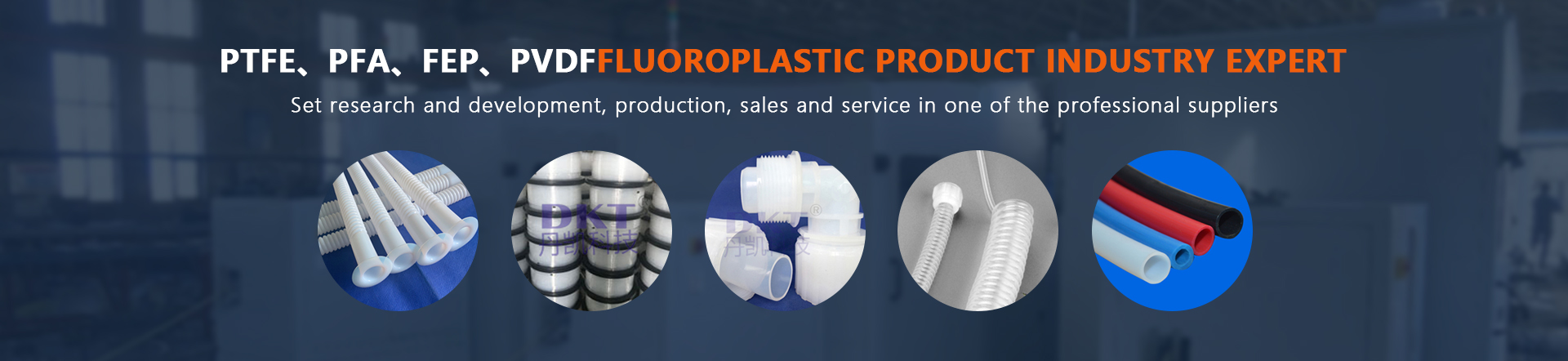
PTFE, PFA, FEP, PVDF Fluoroplastic products industry experts

Customer Witness
What is the temperature resistance of PFA tubing? What are the typical application scenarios for PFA tubing?
I. What is the temperature resistance of PFA tubing?
PFA tubing (melt-processable polytetrafluoroethylene tubing) is a high-performance fluoroplastic pipe with a continuous service temperature range of –80°C to +260°C (500°F). Its maximum continuous operating temperature is 260°C, and it can withstand short-term exposure to temperatures as high as 290–300°C. However, once the temperature exceeds 260°C, its service life declines markedly with increasing temperature. The melting point of PFA lies between 302°C and 310°C.
The primary temperature resistance characteristics of PFA tubing are as follows:
Long-term continuous operating temperature: −80°C to +260°C. Within this temperature range, DanKai PFA tubing maintains its mechanical strength, chemical stability, and dimensional stability without significant degradation.
Maximum continuous operating temperature: +260°C—this is the highest safe operating temperature consistently confirmed by all authoritative sources, including official data from Chemours and Daikin.
The short-term service temperature range is +290°C to +300°C. Under brief exposure at these temperatures, the material will not rapidly decompose or melt; however, long-term use is not recommended.
The melting range is 302°C to 310°C; above this temperature, PFA material will begin to melt and deform.
Factors affecting the temperature resistance of PFA tubing: The actual temperature resistance is influenced by operating pressure, the corrosivity of the process fluid, the presence of mechanical stress, and the duration of continuous service, among other factors.

II. Comparative Temperature Resistance of PFA Tubing vs. Similar Materials
PFA vs. PTFE: Both materials have similar temperature resistance ranges (-80°C to 260°C), but PFA offers superior melt processability and better retention of mechanical strength at temperatures above 250°C.
PFA vs. FEP: The maximum continuous operating temperature for FEP is 200°C, significantly lower than PFA’s 260°C.
III. What are the temperature-resistant application scenarios for PFA tubing?
High-temperature applications: transportation of corrosive chemical media, high-temperature steam sterilization, electronic insulation layers, and more.
Low-temperature applications: ultra-low-temperature refrigeration systems, radiation-resistant aerospace components, liquid-nitrogen transfer lines, and more.
Special requirement: The coefficient of thermal expansion (150–200 μm/(m·K)) must be taken into account, and dimensional compensation allowances should be provided in the design.
IV. Recommendations for Selecting PFA Tubing Based on Temperature Resistance
1. Pressure varies with temperature:
For the same PFA tubing, the allowable working pressure at 260°C is significantly lower than at ambient temperature; therefore, selection should be based on the manufacturer’s pressure–temperature curve rather than solely on the ambient‑temperature burst pressure.
2. Medium and Operating Conditions:
Although the maximum operating temperature is 260°C, if the process fluid is highly corrosive, operates under high pressure, or experiences frequent temperature fluctuations, it is recommended to provide an additional temperature margin.
3. Structure and Connection Method:
Piping systems often have weak points at joints, ferrules, and flanges; the temperature rating of these fittings may be lower than that of the PFA pipe itself, so they must be verified accordingly.
DANKAI is a nationally recognized High-Tech and Specialized, Sophisticated, and Novel enterprise. As an industry expert in PTFE, PFA, FEP, and PVDF fluoropolymer products, DANKAI is a comprehensive professional supplier integrating R&D, manufacturing, sales, and service.
This article is originally written by the Teflon Tube Lady. Follow us to learn something new together!
Key words:
Previous Page
Dankai Technology
Address: Area B, 4th Floor, Building 1, North Yongfa Science and Technology Park, Yanchuan North, Chaoyang Road, Songgang Town, Bao'an District, Shenzhen, China
Tel: +86-755-29979617 23127719 23127819
E-mail: dkt@szdankai.com

Focus on us
Copyright©2024 All rights reserved of Shenzhen Dankai Technology Co., Ltd.