PTFE, PFA, FEP, PVDF Fluoroplastic products industry experts

High temperature casing manufacturers
Classification:
Industry dynamics
Author:
PTFE tube little sister
Source:
PTFE tube little sister
Release time:
2006-03-03
Visits:
What is the 1. PVDF material referred
PVDF polyvinylidene fluoride has a translucent or white powder or particle appearance, closely arranged molecular chains, strong hydrogen bonds, oxygen index of 46%, non-combustible, crystallinity of 65% ~ 78%, density of 1.77~1.80g/cm3, melting point of 172 ℃, thermal deformation temperature of 112~145 ℃, and long-term use temperature of -40~150 ℃.
Poly(vinylidene fluoride), English abbreviation PVDF, mainly refers to vinylidene fluoride homopolymer or copolymer of vinylidene fluoride and other small amount of fluorine-containing vinyl monomer. It has the characteristics of fluorine resin and general resin. In addition to good chemical corrosion resistance, high temperature resistance, oxidation resistance, weather resistance and radiation resistance, it also has special properties such as piezoelectric property, dielectric property and thermoelectric property, it is the second largest product in the production of fluoroplastics, with an annual production capacity of more than 53000 tons worldwide.
The chemical structure is combined with a fluorine-to-carbon bond, and this structure with a short bond nature forms a stable and firm bond with the hydrogen ion. Therefore, fluorocarbon coatings have specific physical and chemical properties, not only have strong wear resistance and impact resistance, but also have high anti-fading and anti-ultraviolet properties in extremely harsh and harsh environments.
PVDF (polyvinylidene fluoride) in fluoroplastics has strong toughness, low friction coefficient, strong corrosion resistance, aging resistance, weather resistance, good radiation resistance and other characteristics.
Forming conditions: dry: original package does not need to dry
Injection temperature: 180~230 ℃
Mold temperature: 60~90 ℃
Betting temperature: 180~265 ℃
Die: 66~140 ℃
High temperature casing manufacturers

Figure 1:PVDF Tube Source: Shenzhen Dankai
There are four hot-selling products in 2.
1. Polytetrafluoroethylene propylene tube, also known as FEP
Common features:
Use temperature:-200 degrees to 200 degrees
Easy processing: can flanging, welding
Aging resistance: can be exposed to ozone and sunlight for a long time without aging
High transparency: low refractive index in all plastics, can be very intuitive to see the flow of the medium in the tube
Corrosion resistance: able to withstand all strong acids, strong oxidants, strong reducing agents and various organic solvents except molten alkali metals, fluorinated media and those above 300 °
2. Teflon tube
PTFE Teflon tube, scientific name Teflon tube (hereinafter referred to as F4 tube and Teflon tube), is a high-quality plunger extrusion tube. Special processing technology is adopted to make the steel tube and plastic tube closely combined, and can bear positive pressure of 1.6Mpa and negative pressure of 77Kpa. It can be used normally at -60 ℃ ~ 260 ℃ and has reliable and excellent corrosion resistance. Transporting strong corrosive gases and liquids at high temperatures, which cannot be replaced by other pipelines. Teflon tubes are now widely used in machinery, chemical industry, aviation, electrical and electronics, defense industry, cutting-edge technology, medical and health and electrical insulation and other fields.
3. Soluble polyethylene propylene tube
PFA plastic is a small amount of perfluoropropyl perfluorovinyl ether and polytetrafluoroethylene copolymer, high temperature -196 ℃-260 ℃. The melt cohesiveness is enhanced, the solution viscosity is reduced, and the performance is unchanged compared with PTFE. This kind of resin can be directly processed into products by ordinary thermoplastic molding methods. Suitable for the production of corrosion-resistant parts, anti-wear parts, seals, insulation and medical equipment parts, high-temperature wires, cable insulation, anti-corrosion equipment, sealing materials, pump valve bushings, and chemical containers.
4. Polyvinylidene fluoride tube, also known as PVDF
pvdf pipe construction is a homopolymer of vinylidene fluoride or a copolymer of vinylidene fluoride and other less recorded fluorine-containing vinyl monomers. pvdf resin has the characteristics of fluorine resin and general-purpose resin. besides good chemical corrosion resistance, high temperature resistance, oxidation resistance, weather resistance and radiation resistance, pvdf pipe also has special properties such as piezoelectricity, dielectric property and thermoelectric property. pvdf pipe is currently the second largest product in fluorine-containing plastics. Temperature resistance -40~150 ℃.

Figure 2: PTFE tube Source: Shenzhen Dankai
Is 3. perfluoroethylene propylene toxic
Compared with other plastics, fluorine-containing plastics have more excellent high and low temperature resistance, corrosion resistance, weather resistance, electrical insulation, non-absorption of water and low coefficient of friction. Polyfluoroethylene propylene has become one of the new plastics that can not be lacked in modern cutting-edge science and technology, military production and various industrial fields.
So, is polytetrafluoroethylene toxic?
All plastics are non-toxic, because plastics are polymer materials and will not be absorbed by the human body. Sometimes, due to the toxic additives that need to be added during processing, or the insufficient reaction during synthesis, the use of small molecule monomers is released, and the plastics are toxic. Polyfluoroethylene propylene is transparent color, the production process does not add any additives, there is no toxicity.
The general characteristics of toxic plastics are:
The color is rich and dense, because a large amount of pigment (organic or inorganic) is added. Cheap pigments without national environmental certification, some will be toxic.
As long as you pay attention to the conditions of use, the plastic does not contact food for a long time, and does not contact food at high temperature. No long-term contact with a single plastic products, aging plastic products in a timely manner to replace, so that it is safe.
According to the processing needs, polyfluoroethylene propylene can be divided into three kinds of pellets, dispersion and paint. Among them, according to the different melt index, the pellets can be used for molding, extrusion and injection molding; the dispersion liquid is used for impregnation and sintering; the paint is used for spraying, etc.
The crystalline melting point of PEF is 580F and the density is 2.15g/CC (g/cm3). It is a soft plastic with lower tensile strength, wear resistance and creep resistance than many engineering plastics.
Shenzhen Dankai Technology Co., Ltd. (ShenZhen DanKai Technology Co., Ltd.), whose predecessor was the Fluoroplastic Material Factory of Dongguan Dandi Insulation Material Co., Ltd. established in 1998, specializes in the research and development, production and sales of FEP, PFA, PTFE and other fluoroplastic tube rod sheet membrane products and other insulation materials. The company has international standards of senior R & D team and the introduction of foreign fluorine plastic products production line. Some fluoroplastic products through ISO9001, SGS, FDA certification, Huawei, Foxconn, the United States, ZTE, Intel, AirTAC and other domestic and foreign cooperation customers fully affirmed. The company's main products are: ① pipes: Ptfe pipes, Fep pipes, Pfa pipes, Pvdf pipes; ② Heat shrinkable tubes: Ptfe heat shrinkable tubes, Fep heat shrinkable tubes, Pfa heat shrinkable tubes, Pvdf heat shrinkable tubes; ③ Plate rod film: Ptfe plate rod film, Feep plate rod film, Pfa plate rod film, Pvdf plate rod film, etc. PE: PE, special, spiral tube, spring tube, rotary cutting tube, welding rod, tee, straight, gasket, joint, cone rod, flared tube, sealing tube, braided tube, corrugated tube, etc. At the same time can be customized according to customer requirements processing production of various specifications of fluorine plastic products.
Key words:
Next Page
Next Page
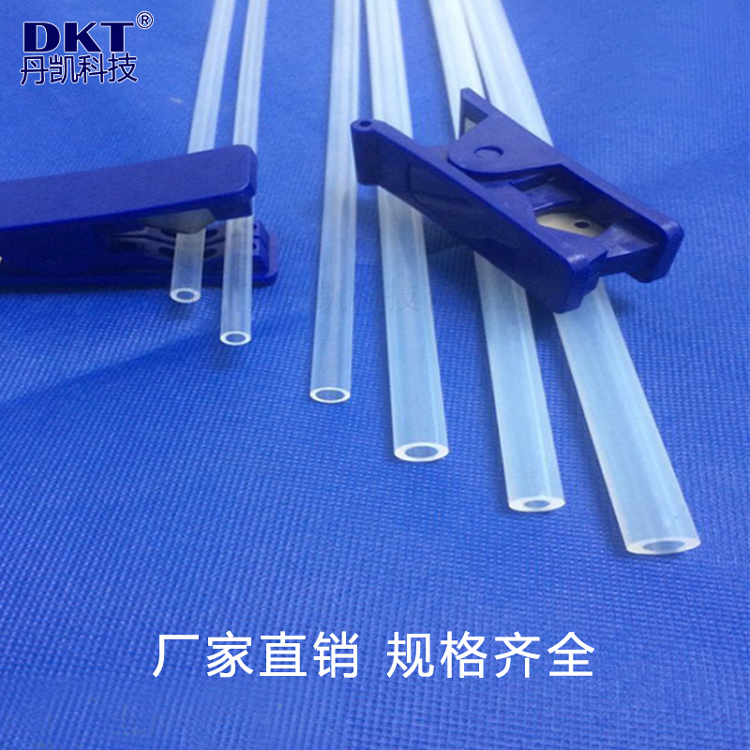


Dankai Technology
Address: Area B, 4th Floor, Building 1, North Yongfa Science and Technology Park, Yanchuan North, Chaoyang Road, Songgang Town, Bao'an District, Shenzhen, China
Tel: +86-755-29979617 23127719 23127819
E-mail: dkt@szdankai.com

Focus on us
Copyright©2024 All rights reserved of Shenzhen Dankai Technology Co., Ltd.