PTFE, PFA, FEP, PVDF Fluoroplastic products industry experts

What are the characteristics of FEP
Classification:
Industry dynamics
Author:
Teflon tube little sister
Source:
Teflon tube little sister
Release time:
2006-10-21
Visits:
Polyethylene fluoride propylene: English name: FEP (Fluorinated ethylene propylene)
FEP is a copolymer of tetrafluoroethylene and hexafluoropropylene, and the content of hexafluoropropylene is about 15%, which is a modified material of polytetrafluoroethylene. Full name: fluorinated ethylene propylene copolymer (perfluorinated ethylene propylene copolymer), referred to as polyethylene propylene, also abbreviated as F46.
With a crystalline melting point of 580 °F and a density of 2.15g/cc (grams per cubic centimeter), FEP is a soft plastic with lower tensile strength, abrasion resistance, and creep resistance than many engineering plastics. It is chemically inert and has a low dielectric constant of about 2.1 over a wide range of temperatures and frequencies. The material does not ignite and can prevent the spread of flame. It has excellent weather resistance, low coefficient of friction, from low temperature to 392 °F can be used. The material can be made into granular products for extrusion and molding, as powders for fluidized beds and electrostatic finishes, and also into aqueous dispersions. Semi-finished products have film, plate. Rods and single fibers.
FEP distributed in the U.S. market is Teflon from DUIPont, Neoflo from Daikin, and IHoustaflow from Hoechst Celanese. Its main use is for the production of tubes and chemical equipment in the village, drum surface and a variety of wires and cables, such as aircraft hook lines, pressurized cables, alarm cables, flat cables and oil well logging cables. FEP films have been used as thin coatings for solar collectors.
F46 resin not only has the characteristics similar to polytetrafluoroethylene, but also has the good processing properties of thermoplastics. Therefore, it makes up for the lack of processing difficulties of PTFE, making it a material to replace PTFE. In the production of wire and cable, it is widely used in electronic equipment transmission wires used at high temperature and high frequency, electronic computer internal connection wires, aerospace wires and special purpose installation wires, oil pump cables and submersible motor winding wires.
According to processing needs, F46 can be divided into three kinds of pellets, dispersion and paint. Among them, according to the different melt index, the pellets can be used for molding, extrusion and injection molding; the dispersion liquid is used for impregnation and sintering; the paint is used for spraying, etc.

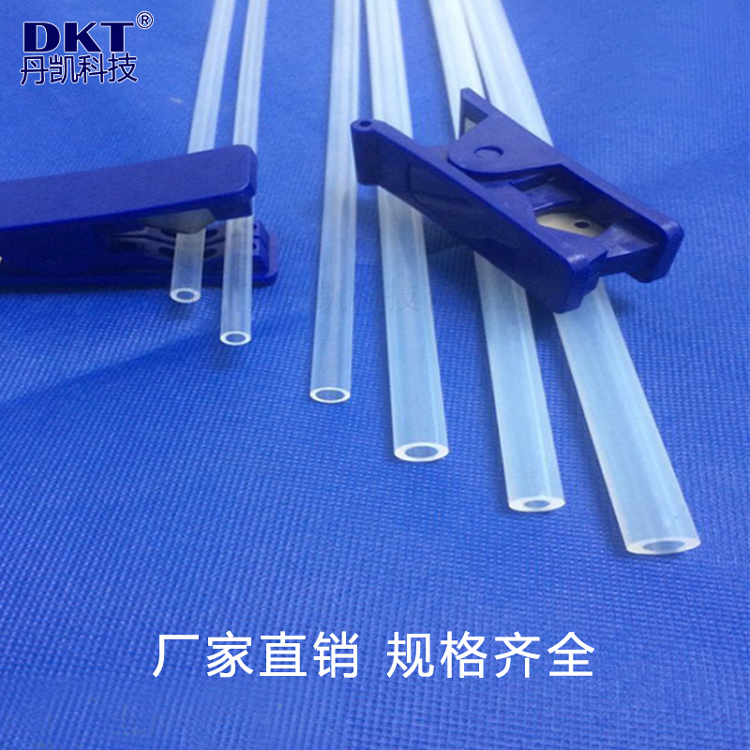
Figure 1: Poly (ethylene fluoride propylene) pipe Source: Shenzhen Dankai
1. Structural characteristics of polyfluoroethylene propylene
Like polytetrafluoroethylene, F46 resin is also a fully fluorinated structure, except that part of the fluorine atoms in the F46 main chain are replaced by trifluoromethyl groups (-CF3).
It can be seen that although F46 resin and polytetrafluoroethylene are composed of fluorocarbon elements, the carbon chain is completely surrounded by fluorine atoms, but F46 has branches and side chains on the main chain of its macromolecules. This structural difference has no great influence on the upper limit of the temperature range of the material under long-term stress. The upper limit temperature of F46 is 200 ℃, while the maximum use temperature of PTFE is 260 ℃. However, this structural difference, but the F46 resin has a fairly certain melting point, and can be used in general thermoplastic processing methods, so that the processing technology is greatly simplified. This is not available in PTFE. This is the main purpose of modifying polytetrafluoroethylene with hexafluoropropylene.
2. Perfluoroethylene propylene properties
The content of hexafluoropropylene in F46 has a certain influence on the performance of the copolymer. The hexafluoropropylene content of the currently produced F46 resin is usually around 14% to 15% (mass fraction).
2.1. Physical Properties
There is no feasible method to determine the molecular weight of F46 resin. But its melt viscosity at 380 ℃ is lower than that of polytetrafluoroethylene, 103~104Pa.s. It can be seen that the molecular weight of F46 is much lower than that of PTFE.
The melting point of F46 varies with the composition of the copolymer, and the melting point becomes lower with the increase of the content of hexafluoropropylene in the copolymer. According to the results of differential thermal analysis, the melting point of domestic F46 resin is mostly between 250 and 270 degrees C, which is lower than that of PTFE.
F46 resin is a crystalline polymer, the degree of crystallinity is lower than that of PTFE. When F46 melt is slowly cooled to the temperature below the melting point of the crystal, the macromolecules are re-crystallized, and the crystallinity is between 50% and 60%. When the melt is rapidly cooled by quenching, the crystallinity is small, between 40% and 50%. The crystal structure morphology of F46 is spherulite structure, and it varies with the resin, processing temperature and heat treatment method.
2.2. Electrical insulation performance
The electrical insulation performance of F46 is very similar to that of PTFE. Its dielectric coefficient is almost unchanged from cryogenic to maximum operating temperature, from 50Hz to 1010Hz UHF, and is very low, only about 2.1. The dielectric loss tangent varies somewhat with frequency, but not with temperature.
The volume resistivity of F46 resin is very high, generally greater than 1015 Ω.m, and changes little with temperature, and is not affected by water and moisture. Arc resistance is more than 165s.
The breakdown field of F46 increases with the decrease of thickness. When the thickness is greater than 1mm, the breakdown field strength is above 30KV/mm, but it does not change with the change of temperature.
2.3. Thermal performance
The heat resistance of F46 resin is second only to PTFE, and it can be used continuously in the temperature range of -85~200 ℃. Even in the extreme cases of − 200 ° C. and 260 ° C., its performance does not deteriorate and it can be used for a short time.
The thermal decomposition temperature of F46 resin is higher than the melting point temperature, and significant thermal decomposition occurs above 400 ℃, and the decomposition products are mainly tetrafluoroethylene and hexafluoropropylene. Since F46 macromolecules usually have other end groups that decompose at temperatures above the melting point, proper ventilation must also be paid attention to when processing above 300°C. F46 is quite stable below the melting point temperature, but the loss of mechanical strength is large at a high temperature of 200°C. The increase in melt index can be used to analyze the decrease in melt viscosity and the occurrence of thermal decomposition of the copolymer.
F46 is still not completely hard and brittle at -250 ℃, but also maintains a small elongation and a certain degree of flexibility, even better than polytetrafluoroethylene, which is beyond all other types of plastics.
2.4. Chemical resistance
The chemical resistance of F46 is similar to that of polytetrafluoroethylene and has excellent chemical resistance. In addition to the high temperature of the fluorine element, molten alkali metal and chlorine trifluoride reaction, and other chemical contact are not corroded.
2.5. Mechanical properties
Compared with PTFE, the hardness and tensile strength of F46 are slightly improved, and the friction coefficient is slightly larger than that of PTFE. At room temperature, F46 has good creep resistance; but when the temperature is higher than 100 ℃, the creep resistance is not as good as PTFE.
2.6. Other performance
F46 resin has very good oxidation resistance in the atmosphere and high atmospheric stability. The radiation resistance of F46 is better than that of PTFE and slightly inferior to polyethylene. In air and at room temperature, the minimum absorbed dose at which F46 begins to change performance is 105-106rad (I. e. 103-104Gy), so it can be used as a radiation-resistant material.
Shenzhen Dankai Technology Co., Ltd. (ShenZhen DanKai Technology Co., Ltd.), whose predecessor was the Fluoroplastic Material Factory of Dongguan Dandi Insulation Material Co., Ltd. established in 1998, specializes in the research and development, production and sales of FEP, PFA, PTFE and other fluoroplastic tube rod sheet membrane products and other insulation materials. The company has international standards of senior R & D team and the introduction of foreign fluorine plastic products production line. Some fluoroplastic products through ISO9001, SGS, FDA certification, Huawei, Foxconn, the United States, ZTE, Intel, AirTAC and other domestic and foreign cooperation customers fully affirmed. The company's main products are: ① pipes: Ptfe pipes, Fep pipes, Pfa pipes, Pvdf pipes; ② Heat shrinkable tubes: Ptfe heat shrinkable tubes, Fep heat shrinkable tubes, Pfa heat shrinkable tubes, Pvdf heat shrinkable tubes; ③ Plate rod film: Ptfe plate rod film, Feep plate rod film, Pfa plate rod film, Pvdf plate rod film, etc. PE: PE, special, spiral tube, spring tube, rotary cutting tube, welding rod, tee, straight, gasket, joint, cone rod, flared tube, sealing tube, braided tube, corrugated tube, etc. At the same time can be customized according to customer requirements processing production of various specifications of fluorine plastic products.
Key words:


Dankai Technology
Address: Area B, 4th Floor, Building 1, North Yongfa Science and Technology Park, Yanchuan North, Chaoyang Road, Songgang Town, Bao'an District, Shenzhen, China
Tel: +86-755-29979617 23127719 23127819
E-mail: dkt@szdankai.com

Focus on us
Copyright©2024 All rights reserved of Shenzhen Dankai Technology Co., Ltd.