PTFE, PFA, FEP, PVDF Fluoroplastic products industry experts

Fully lined PTFE/PFA/F46 fluorine lined ball valve corrosion resistant strong acid and alkali resistant valve
Classification:
Industry dynamics
Author:
PFA tube little sister
Source:
Dankai
Release time:
2022-10-20
Visits:
Fluorine-lined ball valve is an important valve, which is widely used in petrochemical industry, long-distance pipeline and other fields. The closing piece of the ball valve is a ball (or part of the ball) with a hole, and the ball follows the valve
The lever rotates to open or close the valve.
Fluoroplastics, because the molecular structure of fluoroplastics contains fluorine atoms, so it has many excellent properties, such as excellent electrical insulation properties, high heat resistance, outstanding oil resistance, resistance.
Solvent and abrasion resistance, good moisture resistance and low temperature resistance. Therefore, fluoroplastics in the national defense, mechanical and electrical, metallurgy, petrochemical and other industrial sectors occupy an important position. common lining
Fluorine mainly includes: polytetrafluoroethylene (PTFE or F4), polyfluoroethylene propylene FEP (F46) and soluble polytetrafluoroethylene (PFA).
Suitable for temperature:-196~350 ℃ and water, steam, oil, nitric acid, strong oxidation medium acetic acid, urea and other pressure is less than 10.0Mpa on the pipeline.
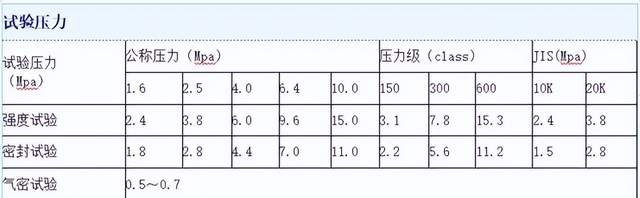
Figure 1: Test pressure diagram Source: Dankai
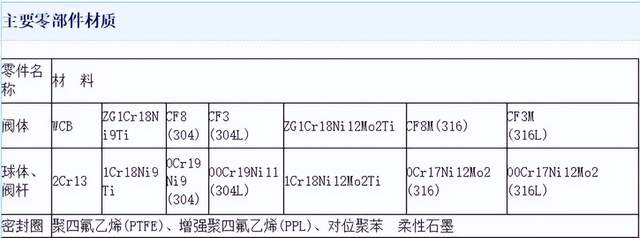
Figure 2: Material drawing of main parts Source: Dankai

Figure 3: Using media map Source: Dankai
Type of fluorine-lined ball valve
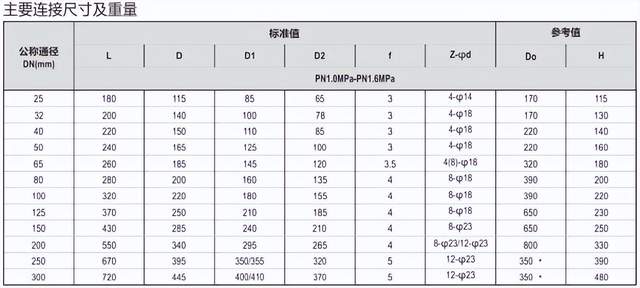
Figure 4: Model map Source: Dankai
Fluorine Lined Ball Valve
Features:
1. The thrust bearing reduces the friction torque of the valve stem, which can make the long-term operation of the valve stem stable and flexible.
2. Anti-static function: a spring is set between the ball, valve stem and valve body, which can export the static electricity generated during the switching process.
3, due to PTFE and other materials have good self lubrication, and the ball friction loss is small, so the service life of pneumatic ball valve is long.
4, the fluid resistance is small: pneumatic ball valve is the smallest fluid resistance of all valve classification, even if the diameter of the pneumatic ball valve, the fluid resistance is quite small.
5, the valve stem seal is reliable: because the valve stem only for rotating movement without lifting movement, the valve stem packing seal is not easy to damage, and the sealing capacity increases with the pressure of the medium.
6, the valve seat sealing performance is good: the use of PTFE and other elastic materials made of sealing ring, the structure is easy to seal, and the valve sealing capacity of pneumatic ball valve increases with the increase of medium pressure
Big.

Figure 5: PTFE fluorine lined ball valve Source: Dankai
Advantages:
1. The fluid resistance is small, and the ball valve with full bore has basically no flow resistance.
2. Simple structure, small size and light weight.
3. Close and reliable. It has two sealing surfaces, and the ball valve sealing surface material widely used in various plastics, good sealing, can achieve complete sealing. It has also been widely used in vacuum systems.
Use.
4. Easy to operate, open and close quickly, from full open to full close as long as the rotation of 90 °, easy to remote control.
5. Convenient maintenance, simple structure of the ball valve, the sealing ring is generally active, and it is convenient to disassemble and replace.
6. When fully open or fully closed, the sealing surface of the ball and the valve seat is isolated from the medium. When the medium passes, it will not cause erosion of the valve sealing surface.
7. Wide range of application, diameter from small to a few millimeters, large to a few meters, from high vacuum to high pressure can be applied.
8. Because the ball valve is wiped during the opening and closing process, it can be used in the medium with suspended solid particles.

Figure 6: PTFE fluorine lined ball valve Source: Dankai
Fluorine lined ball valve main fluorine plastic material has the following three kinds:
FEP (F46)
Applicable medium: any organic solvent or reagent, dilute or concentrated inorganic acid, alkali, ketone, aromatic hydrocarbon, chlorinated hydrocarbon, etc.
Use temperature:-85~200
Features: Mechanics, electrical properties and chemical stability are basically the same as F4, but the outstanding advantage is high dynamic impact toughness, excellent weather resistance and radiation.
PTFE(F4)
Use medium: strong acid, strong alkali, strong oxidant, etc.
Use temperature:-200~260
Features: Excellent chemical stability, high heat resistance, cold resistance, low friction coefficient, is an excellent self-lubricating material, but low mechanical properties, poor fluidity, heat
Big expansion.
Soluble PTFE PFA
Use medium: strong acid, strong alkali, strong oxidant, etc.
Use temperature:-200~260
Features: Excellent chemical stability, high heat resistance, cold resistance, low friction coefficient, is an excellent self-lubricating material, but low mechanical properties, poor fluidity, heat
Big expansion.

Figure 7: PTFE fluorine-lined ball valve Source: Dankai
National standard for fluorine-lined ball valves (executive standard)
1. Design and manufacture: GB12237-89, API608, API 6D, JPI 7S-48, BS5351, DIN3357.
2. Flange size: JB/T74 ~ 90(JB74 ~ 90), GB9112 ~ 9131, HGJ44 ~ 76, SH3406, ANSI B16.5, JIS B2212 ~ 2214, NF E29-
211、DIN2543。
3. Structure length: GB12221-89, ANSI B16.10, JIS B2002, NF E29-305, DIN3202.
4. Main inspection test: JB/T 9092, API 598.
This article is originally created by Teflon's little sister. Welcome to pay attention and take you to grow knowledge together!
Key words:
Ball valve, sealing, PTFE, corrosion resistance, high temperature resistance, cold resistance, low friction coefficient, self-lubricating
Previous Page


Dankai Technology
Address: Area B, 4th Floor, Building 1, North Yongfa Science and Technology Park, Yanchuan North, Chaoyang Road, Songgang Town, Bao'an District, Shenzhen, China
Tel: +86-755-29979617 23127719 23127819
E-mail: dkt@szdankai.com

Focus on us
Copyright©2024 All rights reserved of Shenzhen Dankai Technology Co., Ltd.