PTFE, PFA, FEP, PVDF Fluoroplastic products industry experts

Polytetrafluoroethylene (PTFE) Papers
Classification:
Industry dynamics
Author:
PFA tube little sister
Source:
Dankai
Release time:
2022-12-02
Visits:
1. Definition and properties of PTFE
Teflon(The English abbreviation is Teflon or [PTFE,F4]), known as/commonly known as "plastic king", Chinese trade names "Teflon", "Teflon" (teflon), "Teflon", "Teflon", "Tefu"
Long "," Teflon "and so on. It is a polymer compound formed by the polymerization of tetrafluoroethylene, which has excellent chemical stability and corrosion resistance (it is one of the best corrosion resistance materials in the world today,
In addition to molten metal sodium and liquid fluorine, can withstand all other chemicals, boiling in aqua regia does not change, widely used in a variety of need to resist acid and alkali and organic solvents), sealing, high lubrication non-stick
Electrical insulation, good anti-aging endurance and excellent temperature resistance (can work for a long time at a temperature of 250 ℃ to -180 ℃). Teflon itself is not toxic to humans, but in the production process
One of the raw materials used in ammonium perfluorooctanoate (PFOA) is considered to be possibly carcinogenic.
1.1 chemical properties
Radiation resistance and low permeability: long-term exposure to the atmosphere, the surface and performance remain unchanged.
Non-combustibility: limiting oxygen index below 90.
Acid and alkali resistance: insoluble in strong acids, strong alkalis and organic solvents.
Oxidation resistance: can resist the corrosion of strong oxidants.
Acid and alkaline: neutral.
1.2 physical properties
Density: 2.1-2.3g/cm³
The mechanical properties of polytetrafluoroethylene are relatively soft. It has a very low surface energy. Polytetrafluoroethylene (F4,PTFE) has a series of excellent performance: high temperature resistance-long-term use temperature 200~260 degrees, low resistance
Temperature-still soft at -100 degrees; Corrosion resistance-resistance to aqua regia and all organic solvents; Weather resistance-the best aging life in plastics; High lubrication-has the smallest friction coefficient (0.04) in plastics;
Non-sticky-has the smallest surface tension in solid materials without adhering to any substances; non-toxic-has physiological inertia; excellent electrical properties, is an ideal C- class insulation material. PTFE
It is widely used in national defense, atomic energy, petroleum, radio, electrical machinery, chemical industry and other important sectors.
1.3 mechanical properties
Its coefficient of friction is extremely small, only 1/5 of polyethylene, which is an important feature of perfluorocarbon surfaces. Since the fluorine-carbon chain intermolecular force is extremely low, polytetrafluoroethylene has non-tackiness. Polytetrafluoroethylene
Alkene maintains excellent mechanical properties in a wide temperature range of -196~260 ℃, and one of the characteristics of perfluorocarbon polymers is that they are not brittle at low temperatures.
1.4 chemical and weather resistance
In addition to the molten alkali metal, polytetrafluoroethylene is almost not corroded by any chemical agent. For example, in concentrated sulfuric acid, nitric acid, hydrochloric acid, or even boiled in aqua regia, its weight and performance have not changed, but also almost
Insoluble in all solvents, only slightly soluble in fully alkanes above 300°C (about 0.1g/100g). PTFE does not absorb moisture, non-flammable, oxygen, ultraviolet are extremely stable, with excellent weather resistance.
1.5 electrical properties
PTFE has low dielectric constant and dielectric loss over a wide frequency range, and high breakdown voltage, volume resistivity and arc resistance.
1.6 radiation resistance
The radiation resistance of PTFE is poor (104 rad), and the degradation caused by high-energy radiation, the electrical and mechanical properties of the polymer are significantly reduced.

Figure 1: PTFE tube Source: Dankai
2. PTFE classification and its filling products
2.1 General Materials
All kinds of rods, tubes, plates, membranes, belts, ropes, packing, gaskets, and graphite, molybdenum disulfide, aluminum oxide, glass fiber, carbon fiber as filler, to improve the mechanical properties of pure PTFE.
2.2 anti-corrosion class
Pipes and fittings: pure PTFE pipe; PTFE lined pipe; wrapped glass steel pipe; steel composite flange;
Chemical container lining: PTFE lined kettle;
PTFE lined groove;
Teflon lined tower;
Heat exchanger;
Corrugated telescopic pipe;
Main components of valves and pumps;
Steel wire reinforced full pressure hose;
Filter materials.
Polytetrafluoroethylene membrane is a new material with a large number of pores in the vertical and horizontal two-way stretching. It can be compounded with other fabrics to make smoke solid-phase anti-corrosion filter bags or good waterproof, breathable and windproof.
Rain gear sportswear, cold-proof clothing, special protective clothing and light tents, pharmaceutical air compressed air, sterile filtration of various solvents and filtration of high-purity gases in the electronics industry.
2.3 seal class
1. Static seal: sandwich gasket; Sitting material belt; Elastic sealing belt;
2. Dynamic seal (packing and annular seal):V-shaped seal body-used for shaft, piston rod and valve; Internal seal of turbo pump; Composite sealing ring of polytetrafluoroethylene and rubber; With bellows can be
Telescopic mechanical seal.
2.4 load bearing class
1. Filled PTFE bearings, used in food and chemical papermaking, textile machinery;
2. Porous copper impregnated fluorine plastic metal bearings, can be used under high temperature and high pressure dry friction, vacuum conditions;
3. PTFE fiber bearing PTFE fiber and glass fiber or other fiber blended composite fabric made of bearing lining, used for low speed and high load;
4. Fill PTFE piston ring, guide ring, machine tool guide rail and bridge slider;
2.5 insulation class
1. Class C insulation material for wire and cable;
2. The sheath of the double water internal cooling steam turbine generator stator and rotor water pipe and thermocouple;
3. Microwave insulating materials for high-frequency and ultra-high-frequency communication equipment and radar;
4. Printed circuit board and motor, transformer (including gas transformer) insulation materials;
5. Insulating materials for air conditioners, electronic furnaces, various heaters and sulfur hexafluoride circuit breakers;
2.6 anti-sticking class
1. The PTFE glass cloth coating layer on the hot roller of the sizing machine-can avoid the sticky roller phenomenon formed by the chemical slurry, and greatly improve the production rate and the quality of the gray cloth;
2. Microwave drying conveyor belt of food industry-compared with conveyor belt of other materials, it does not absorb microwave energy, and the non-stick material has the advantages of saving electricity and cleaning;
3. Polyethylene bag sealing heat sealing sleeve anti-sticking material;
4. Anti-sticking coating-used for kitchen pots, baking molds for baking bread, frozen food storage trays, electric iron bottom, copier rollers;

Figure 2: PTFE tube Source: Dankai
3. Synthesis method of polytetrafluoroethylene
At present, the latest type of engineering plastics in the chemical industry has the reputation of "plastic king. PTFE is produced by radical polymerization of tetrafluoroethylene. Its polymerization methods include bulk polymerization, solution polymerization, suspension polymerization.
And emulsion polymerization (also known as dispersion polymerization), industrial production is mainly used in suspension polymerization and emulsion polymerization. Polymerization is generally at 40~80 ℃,3 ~ 26kgf / cm2 pressure, using inorganic persulfuric acid
Salt, organic peroxide as initiator.
4. Application performance of PTFE
Because of the excellent performance of PTFE in many aspects, it is widely used in chemical industry, machinery, electronics, medicine, textile and other industries as high and low temperature resistant materials, corrosion resistant materials, insulation materials, medical
Materials, anti-sticking coatings, etc.
4.1 used as anti-corrosion material
PTFE material overcomes the shortcomings of poor corrosion resistance of ordinary plastics and metals. With its excellent high and low temperature resistance and corrosion resistance, it has become the main corrosion resistance in petroleum, chemical, textile and other industries.
Materials. For example, it is used to manufacture pipes for transporting corrosive gases, exhaust pipes, steam pipes, seals for high-pressure vessels, valves, pumps, etc.
4.2 used as oil-free lubricating material
Since the PTFE material has the lowest coefficient of friction of the known solid materials, this makes the filled PTFE material the most ideal material for oil-free lubrication (direct load bearing) of mechanical equipment parts. For example
Papermaking, food, textile and other industrial equipment plus lubricating oil is easy to make the product contaminated, so the use of PTFE material to solve this problem.
4.3 Advanced Dielectric Materials Used as Electronic Devices
PTFE's inherent low loss and dielectric constant make it an ideal insulation for wire and cable: its unique porous structure minimizes loss and distortion and allows signals to travel at near the speed of light.
transmission, and has thermal stability and mechanical flexibility. At the same time, PTFE can also reduce the size and weight of the overall interconnection, and is a good filling medium material. So PTFE products are
It is widely used in many high-performance and challenging fields such as telecommunications, computers, test and measurement, national defense, aviation and aerospace markets.
4.4 used as medical materials
Due to the excellent mechanical properties, durability, stability and biological adaptability of expanded PTFE material, it will not cause the rejection of the body, has no physiological side effects on the human body, and has the characteristics of microporous structure, from 2
In the 1970 s, it was first made into artificial blood vessels for clinical use. Now, due to its excellent performance, PTFE is more and more widely used in medicine. including artificial blood vessels for soft tissue regeneration
and patches and surgical sutures for vascular, cardiac, general surgery and plastic surgery. For example, the more common cosmetic surgery rhinoplasty and mandibular plastic surgery is the use of PTFE as a filler material.
4.5 used as anti-sticking material
PTFE material has the smallest surface tension in the solid material, does not adhere to any substance, but also has the excellent characteristics of high and low temperature resistance, non-toxic, so PTFE as a coating is often used as a tableware anti-stick lining,
Mainly used for non-stick pan and microwave oven liner.
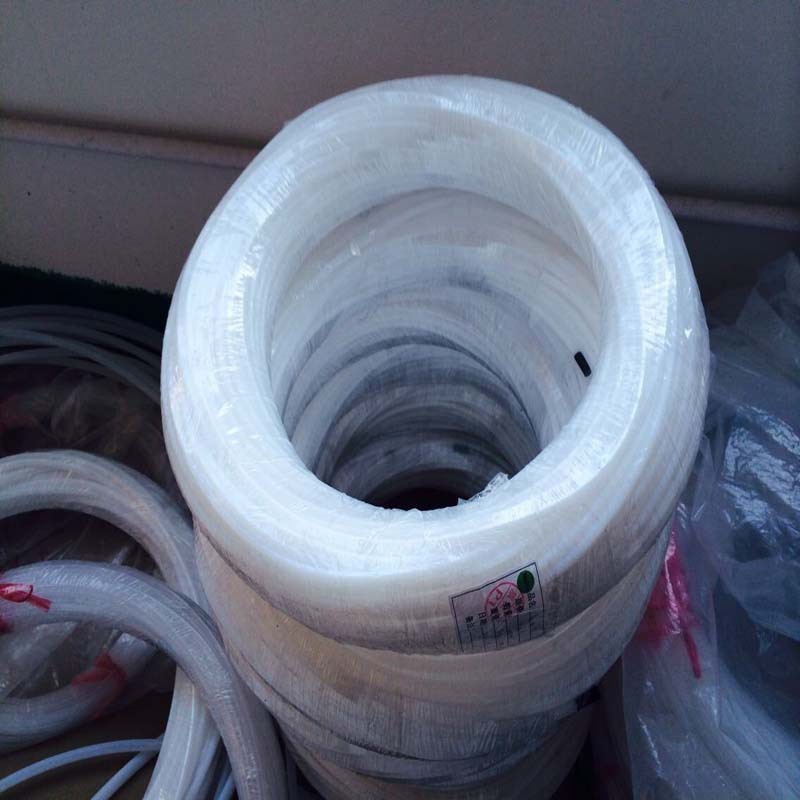
Figure 3: PTFE tube Source: Dankai
5. The domestic and foreign production situation and market situation of PTFE
Polytetrafluoroethylene is the main variety of fluoroplastics, the three major products currently supplied to the market are suspension resin, dispersion resin and concentrated dispersion, which account for 50%-60%, 20%-35%, respectively,
10%-20%. Suspension method PTFE is mainly used for sealing rings, gaskets, chemical pumps, valves, pipe spare parts and equipment lining, electrical insulation parts, films, etc. Dispersion method PTFE is mainly used for corrosion resistance
Corrosion, high temperature resistance, high voltage resistance wire and cable, chemical pipeline lining, etc.; PTFE concentrated dispersion is mainly used in food, textile, paper and other fields of human anti-sticking coating and impregnated glass cloth, asbestos
Wait.
At present, the price of Shanghai Sanaifu PTFE dispersion resin in China is 64000 -66000 yuan/ton, and the price is stable. Shandong Dongyue PTFE Dispersion Resin Price 60000 -66000 Yuan/Ton; China
Hao Chenguang PTFE Dispersion Resin Merchants Offer 65000 -66000 Yuan/Ton; Zhejiang Jus Sheng Fluoride Chemical Dispersion Resin Factory Offers 62,000-65,000 Yuan/Ton. Used for processing ordinary molded products
The price of suspended polytetrafluoroethylene has not fluctuated much in the near future. The price in Sichuan is basically between 55000 yuan/ton and 56000 yuan/ton. The first transaction is mainly to maintain the previous orders. The retail trading volume is not large. Polytetrafluoroethylene
The olefin dispersion emulsion has been trading smoothly in the near future and is expected to remain at 42000 yuan/ton in the short term.
On April 10, 2010, Zhang Fang, director of the Fine Chemicals Division of the Petroleum and Chemical Industry Planning Institute, said: "Fluoropolymers are an important product in the organic fluorine industry, but domestic enterprises, in addition to PTFE,
Other fluoropolymers hardly do. At home, PTFE accounts for about 90% of the total amount of fluoropolymers; while in foreign countries, the proportion is about 50%. Even if it is polytetrafluoroethylene, domestic only
It can produce some low-end products for export, but high-end products need to be imported from abroad, and the import unit price is more than twice the export unit price." In fact, high-performance PTFE, fluorine rubber, poly
Fluorine ethyl propylene is worth the attention of domestic enterprises. Therefore, the prospect of PTFE is considerable.
6. Research progress in the application field of PTFE
Research Progress of Surface Modification of 6.1 Polytetrafluoroethylene
Polytetrafluoroethylene (PTFE) has excellent high and low temperature resistance and chemical corrosion resistance, which can be widely used in aviation, aerospace, electronic and mechanical fields. However, PTFE has a lower surface energy
The disadvantages of small surface area and poor bonding performance with other materials have directly affected its application in bonding, printing and dyeing, and biocompatibility. In recent years, researchers at home and abroad through surface modification.
Treatment methods (such as sodium naphthalene complex chemical modification, high temperature melting modification, high energy radiation grafting modification, excimer laser treatment, ion beam injection modification and low temperature plasma modification, etc.)
PTFE bonding problems, and achieved good results.
Research Progress of 6.2 PTFE in Anticorrosive Coatings
At present, metals and their alloys are still very important structural materials, and their applications are widespread in various fields of the national economy. The phenomenon of metal corrosion is widespread and brings great losses to the national economy. Metal corrosion protection
There are many corrosion methods, among which organic coating anti-corrosion is one of the most common and important means, which has the advantages of simple construction, convenient maintenance, low cost and wide adaptability. With the development of social economy, people's living standard
The improvement of the environment and the awareness of environmental protection have put forward higher requirements for coatings and coating methods. Organic fluorine polymer has excellent chemical resistance, heat resistance, weather resistance, non-stick
Energy and lubrication performance, more and more attention, is widely used in heavy anti-corrosion, high-grade decoration, anti-sticking and lubrication treatment and so on.
Among all organic fluoropolymers, polytetrafluoroethylene (PTFE) has the best anti-corrosion performance and the most widely used. PTFE has very good corrosion resistance and heat resistance, in addition to melting in the alkali metal lithium, sodium, potassium,
Chlorine trifluoride, oxygen trifluoride at high temperature, high flow rate of liquid fluorine, it can resist almost all chemical media (including concentrated nitric acid and aqua regia) erosion. It can work at -180~260 ℃ for a long time, and has
Excellent electrical insulation, anti-adhesion, and low friction factor. However, due to some inherent defects of PTFE, especially its large cold flow performance and poor processing performance, its application is limited.
Therefore, in-depth study of the properties of PTFE, improve its processing performance, the development of new PTFE composite materials.
Research Progress of 6.3 PTFE in Fiber
Only a handful of companies in the world have the ability to process PTFE materials into fibers and monofilaments, and the fibers produced by them have low friction, difficult to burn, and good insulation and thermal insulation. By
PTFE can be widely used in waste incineration dust removal due to its resistance to oxidation and corrosion of strong oxides and no hydrolysis reaction at all, and will be widely used in dust removal of high-sulfur coal in the future. Good
Good cleaning performance of PTFE filter material service life than other materials increased by 1~3 times (such as foreign records with 100 PTFE fiber made of filter material has been used for 7~10 years), with high
Price ratio.
Research Progress of 6.4 PTFE in Mechanical Application
The application of filled modified PTFE in sliding guides, friction parts, seals, anti-corrosion parts, building materials, agricultural machinery materials, etc., is considered from both material performance and structure.
In the automotive industry, regular weapons, ships, aerospace and atomic energy, medicine, environmental protection and other mechanical fields have broad prospects.
Application of 6.5 polytetrafluoroethylene in plastic surgery
Gore-Tex expanded polytetrafluoroethylene (ePTFE) is a kind of polymer soft tissue filling material. In the 70 s of the last century, the artificial blood vessels of ePTFE should be clinically first. Due to the good tissue compatibility of ePTFE
Well, in the early 1980 s, some developed countries have been applied to plastic and cosmetic surgery, especially rhinoplasty, restoration of facial depression and deformity, increased lip line, thickened lips and too deep nasolabial groove.
technique. For patients with saddle nose deformity or low nasal bridge, eFFFE rhinoplasty can be selected for silicone rubber prosthesis implantation. Tissue reaction due to silicone rubber prosthesis implantation, resulting in implant removal, can also be
Implanted ePTFE nasal model. Elevated lip line, lip thickening, deep nasolabial groove, forehead depression, etc., the best effect is to use eFFFE patch implantation or model implantation.
Summary
The special properties of PTFE mean broader prospects. Although the production and application of PTFE in China has a certain foundation, the gap with foreign countries is still large, so we should study
application of the face.
This article is originally created by Teflon's little sister. Welcome to pay attention and take you to grow knowledge together!
Key words:
PTFE, material, ptfe, performance, with, chemical stability, corrosion resistance, sealing, high lubrication, electrical insulation, anti-aging
Next Page
Next Page
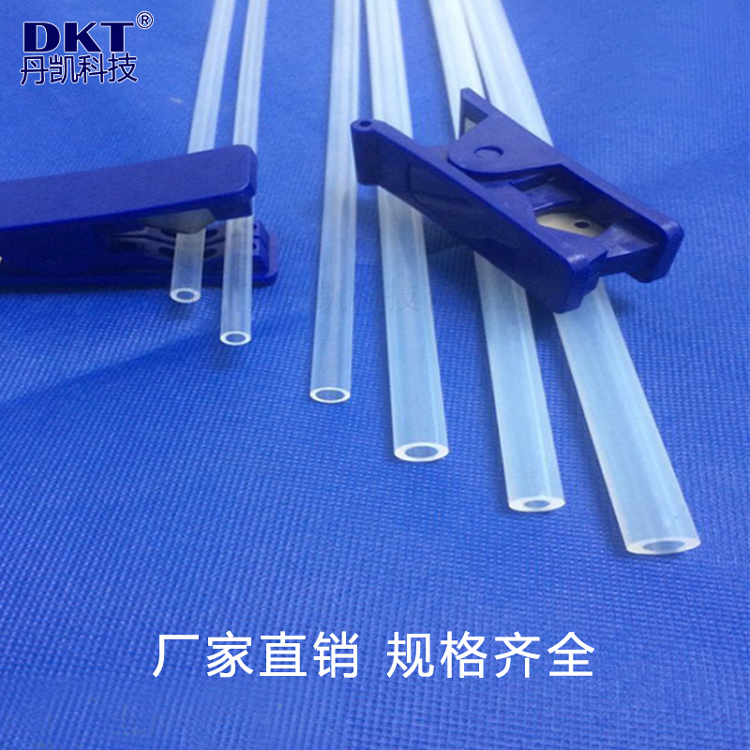


Dankai Technology
Address: Area B, 4th Floor, Building 1, North Yongfa Science and Technology Park, Yanchuan North, Chaoyang Road, Songgang Town, Bao'an District, Shenzhen, China
Tel: +86-755-29979617 23127719 23127819
E-mail: dkt@szdankai.com

Focus on us
Copyright©2024 All rights reserved of Shenzhen Dankai Technology Co., Ltd.