PTFE, PFA, FEP, PVDF Fluoroplastic products industry experts

Technological progress promotes the growth of plastic exports
Classification:
Industry dynamics
Author:
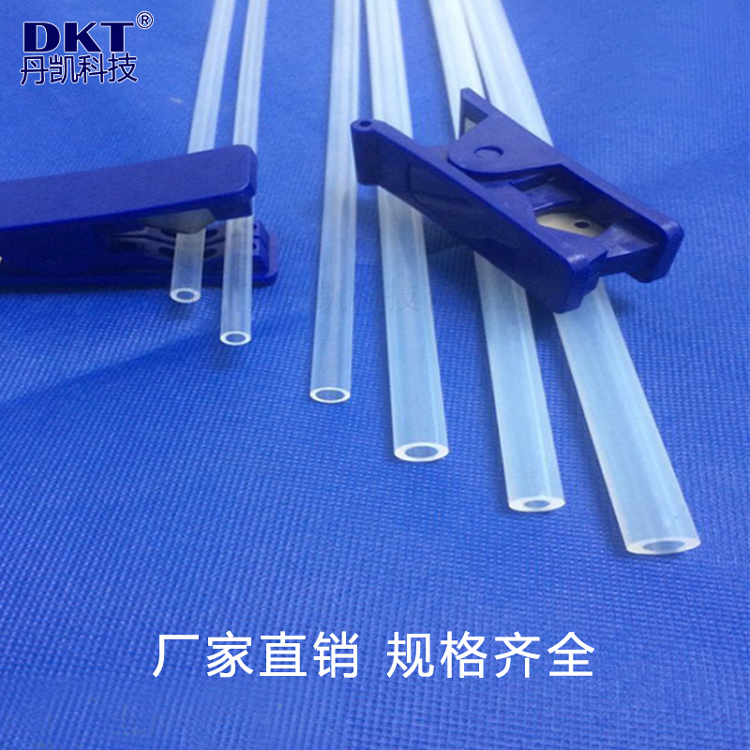
FEP tube little sister
Source:
FEP tube little sister
Release time:
2015-01-02
Visits:
From January to December 2014, China's exports of plastic products maintained a small growth, and diversification, specialization and multi-function became the direction of the development of plastic products. Industry insiders said that at present, the low concentration of my country's plastics industry and the contradiction of product homogeneity restrict the development of the industry, and the transformation of the development model has become a key issue for the plastics industry to be resolved.
Exports of plastic products rose slightly
According to the latest statistics from the General Administration of Customs, the cumulative export of plastic products from January to December 2014 was 9.51 million tons, an increase of 6.1 percent over the same period last year.
According to industry insiders, there are two reasons for the continuous growth of my country's plastic products exports throughout 2014. On the one hand, the development of the domestic industry and sufficient supply provide a solid foundation for export growth. The output of plastic products in China has always been in the forefront of the world rankings, and the output of a variety of plastic products has ranked first in the world. For example, the production and sales of polyurethane products account for more than 40% of the world's total output, and the scale of production and consumption ranks first in the world. China has become a major producer of plastic products in the world.
On the other hand, the application field continues to expand to support the steady increase in exports of plastic products. With the continuous emergence of new materials, new equipment, and new processes, plastic products are developing in the direction of diversification, specialization and multi-functionality, and the application fields continue to expand. The demand for daily necessities, automobiles, packaging, medical care, electronic appliances and other industries is growing rapidly.
It is predicted that the global plastic consumption is expected to exceed 0.5 billion tons in 2016. In the field of plastic products terminal, consumer electronics is expected to become the fastest growing market for plastic demand, with an annual growth rate of 9%. In terms of medical equipment, from 2012 to 2018, the global demand for medical polymer materials will continue to rise at an annual growth rate of 5.6. In terms of automotive plastics, global automotive plastics consumption will maintain an annual growth rate of 13.4 per cent over the next five years, with market capitalization surging from $21.617 billion in 2012 to $46.112 billion in 2018.
Plastic Industry Urgent Change in Development Mode
Although China's exports of plastic products have grown rapidly, they are also facing some pressure. The reporter learned that the plastics industry is gradually increasing in the face of competitive pressure from neighboring countries. With the continuous rise of domestic labor costs, the traditional industrial advantages established by China with low labor prices for a long time are gradually losing compared with Vietnam, India and other countries.
At the same time, the low concentration of the plastics industry and the contradiction of product homogeneity restrict the healthy development of the plastics industry. At present, China's plastic products industry as a whole is characterized by low industrial concentration, scattered productivity, low degree of specialized production and low deep processing ratio. The problem of low concentration of plastic enterprises is the main reason for the excessive production of similar plastic products in China, the overproduction of low-end products and fierce competition, which leads to the overall operation of the industry.
It is understood that China's plastics industry generally implements extensive management, forming a situation in which factories fight for themselves, villages fight for themselves, and large-scale products, resulting in overheated investment in basic equipment of local enterprises and irrational growth in the production of low-value products. Industry insiders said that at present, the domestic plastics industry is still in a low-level stage of development, and the quality and added value of products are generally not high, and only meet the general consumer demand of foreign countries. In addition, the level of technological development of the domestic plastics industry is generally not high, and there is still a big gap between the technological innovation and technological research and development and the advanced level of foreign countries. Changing the development model has become a key problem to be solved in the plastics industry.
In addition, product quality standards are increasingly stringent restrictions on the export of plastic products. Since the EU meeting in June 2014 passed the "Packaging and Packaging Waste Directive" amendments, China's plastic bags exported to the EU more stringent. The amendment to the Packaging and Packaging Waste Directive puts forward stricter regulations on the packaging and use of products. The amendment requires EU member states to reduce portable plastic bags by 50% by 2017 based on 2010 data (plastic bags with a thickness of 10 microns to 49 microns) and by 80% by 2019.
Key words:
Previous Page


Dankai Technology
Address: Area B, 4th Floor, Building 1, North Yongfa Science and Technology Park, Yanchuan North, Chaoyang Road, Songgang Town, Bao'an District, Shenzhen, China
Tel: +86-755-29979617 23127719 23127819
E-mail: dkt@szdankai.com

Focus on us
Copyright©2024 All rights reserved of Shenzhen Dankai Technology Co., Ltd.