PTFE, PFA, FEP, PVDF Fluoroplastic products industry experts

Composite allows plastic antennae to extend farther
Classification:
Industry dynamics
Author:
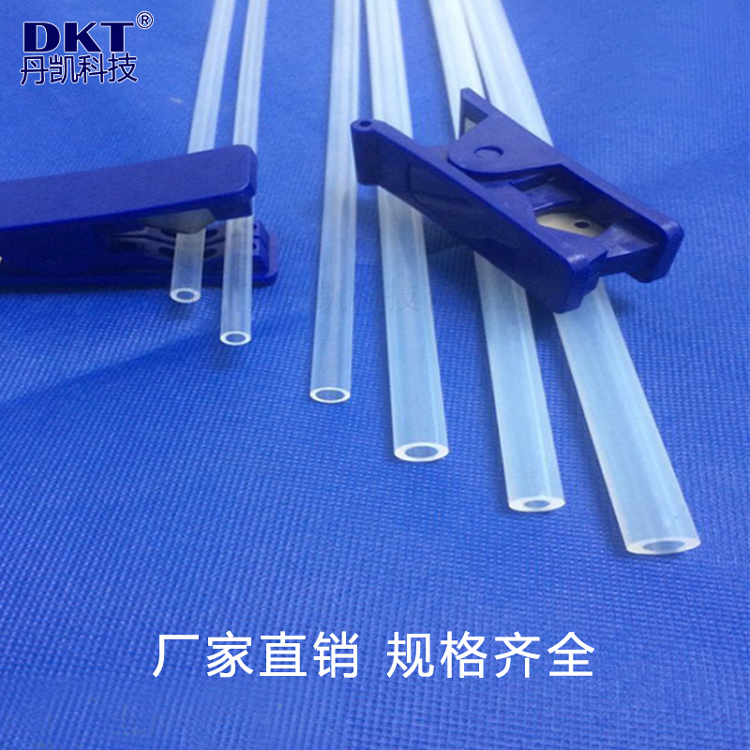
FEP tube little sister
Source:
FEP tube little sister
Release time:
2015-04-16
Visits:
The superior performance of carbon fiber reinforced composites has outstanding performance in various industries such as wind power.
Resin matrix composites are fiber reinforced materials based on organic polymers. Through compounding, plastics have more superior properties and further expand their application fields.
It is estimated that the output of resin-based composites in China is expected to reach 5.3 million tons in 2015, including 3 million tons of thermosetting composites and 2.3 million tons of thermoplastic composites. In the past few years, thermosetting composite materials have occupied most of the market share, but due to its non-recyclability, difficult processing, high production costs and other factors, some products are gradually replaced by thermoplastic composite materials. Thermoplastic composite materials were developed in the 1980 s. They belong to a new type of composite materials with "high performance, low cost, and green environmental protection". They can replace some expensive engineering plastics, non-environmentally friendly thermosetting composite materials and light metal (Such as aluminum alloy) materials, and are widely used in aerospace, automobiles, wind power, electrical appliances, trains, sports equipment, construction, military and other industrial products, with rapid development, in order to meet the new development requirements of these fields, materials with superior performance are provided.
In the aerospace field, the performance requirements of components continue to push the performance of currently used metals and thermosetting materials to the limit, and new materials need to be found. With the introduction of hybrid molding technology, Victrex combines the strength of PAEK continuously reinforced composites with the design flexibility of PEEK injection molding solutions. Compared with the hours required for metal or thermosetting plastics, this overmolding process can produce the same parts in minutes. This technology not only achieves high specific strength, but also reduces weight by up to 60%, while integrating several parts into a simple and highly functional component.
In the automotive field, the application of composite materials has sprung up in recent years. Global automakers are facing challenging new regulations on fuel economy and greenhouse gas emissions, and the demand for automobile consumption reduction is rising sharply. As one of the important lightweight materials, carbon fiber reinforced resin matrix composites (CFRP) are favored by major automakers. BMW of Germany took the lead in launching the world's first mass-produced pure electric vehicle "i3" with CFRP skeleton body ". According to Mitsubishi Liyang, its carbon fiber raw material provider, major European automakers other than BMW will also adopt CFRP in 2-50000 production vehicles per year to cope with stricter European fuel efficiency regulations in 2020. Toray's polyamide (PA) thermoplastic CFRP is used in the battery pack housing of Toyota fuel cell vehicle MIRAI, which is the first time CFRP has been used in the structural parts of automobiles. Teijin and General Motors jointly developed thermoplastic CFRP components for mass production vehicles, with the goal of producing tens of thousands of production vehicles per year. With the development of 3D printing technology, the world's first concept car manufactured using 3D printing technology also uses carbon fiber composite materials. Its body is made of LNPTM STAT-KONTM carbon fiber reinforced composite material from Saudi Basic Industries Corporation (SABIC). Due to its excellent strength-to-weight ratio and high rigidity, it can minimize distortion in the 3D printing process, enhance the design beauty and strengthen the operation performance.
CFRP is regarded as the mainstream automobile material in the future, but for a long time in the future, glass fiber reinforced thermoplastic composite material will still be one of the main varieties of plastic composite material application. CFRP will be widely used in high-performance automobile body, but due to high cost, it can not become the mainstream product.
Resin matrix composites have also been widely used in the field of wind power. The large capacity of the unit has become the trend of the development of wind energy in the world, and the blade length has also increased from 30 to 40 meters to more than 60 meters. With the increase of blade length, how to reduce the weight of wind turbine blades has become a common problem for the wind power equipment industry. The application of carbon fiber composite materials in large blades has become a trend.
The performance superiority of resin matrix composites is attracting more and more attention in the field. With the decline of the price of related raw materials and the improvement of processing technology, the charm of composite materials will be fully displayed in more fields. In order to promote the development of composite materials, this year's CHINAPLAS 2015 has opened a special area of "composite and special materials" in 10.3 pavilion in area B, where the industry can see the latest composite materials and their applications.
Key words:


Dankai Technology
Address: Area B, 4th Floor, Building 1, North Yongfa Science and Technology Park, Yanchuan North, Chaoyang Road, Songgang Town, Bao'an District, Shenzhen, China
Tel: +86-755-29979617 23127719 23127819
E-mail: dkt@szdankai.com

Focus on us
Copyright©2024 All rights reserved of Shenzhen Dankai Technology Co., Ltd.