PTFE, PFA, FEP, PVDF Fluoroplastic products industry experts

What are the characteristics and uses of FEP sealing tube?
Classification:
Company Dynamics
Author:
Source:
Release time:
2024-02-29
Visits:
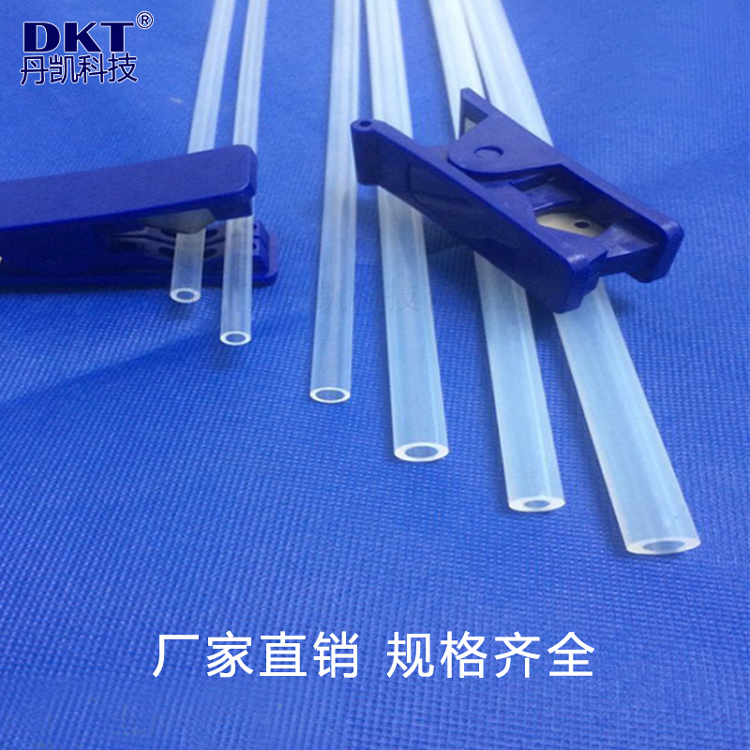
FEP sealed tubing is typically a tubular product made from a polyethylene propylene (FEP) material and is primarily used in packaging applications where high chemical resistance, transparency, and thermal stability are required. It forms a sealed end by precision machining or heating shrinkage to protect the internal components from the external environment.
What are the characteristics of 1. FEP sealing tube?
FEP sealing tube has the following remarkable characteristics:
Extremely high chemical stability: It has excellent corrosion resistance to almost all chemicals, including strong acids, strong alkalis and various organic solvents.
2. Excellent temperature resistance: It can maintain good physical properties and mechanical strength in a wide temperature range of -80 ℃ to 200 ℃, without aging and poisoning.
3. Low friction coefficient and non-adhesion: the inner wall is smooth, not easy to adhere to materials, suitable for conveying high-purity fluids and reducing flow resistance.
Good transparency: it is convenient to observe the internal situation, suitable for sensors, optical fibers and other applications requiring optical monitoring.
5. High insulation performance: excellent electrical insulation performance, can be used as a wire and cable terminal protection or electronic components packaging materials.
6. Easy to process and clean: can be hot forming, welding and cutting, and easy to clean and disinfect, meet the requirements of high clean occasions.

What is the use of 2. FEP sealing tube?
FEP sealing tube is widely used in many industries and fields:
1. Medical devices: used for liquid delivery systems, sealing of biological sample storage containers, and packaging of catheters and connectors in medical equipment.
Semiconductor and electronics industry: packaging sensitive electronic components to prevent moisture, chemicals and dust pollution, improve device reliability.
3. Laboratory equipment: as a reaction kettle, sample bottles, test tubes and other laboratory equipment sealing components, to protect the experimental process from contamination.
Optoelectronic communication: Provide protection at the fiber joint to prevent environmental factors from damaging the fiber end face and ensure the quality of signal transmission.
5. Chemical industry: as the end seal of the pipeline conveying corrosive medium, and the sealing protection of the heat exchanger and pump valve assembly working under high temperature and high pressure.
6. Food and pharmaceutical industry: as a key component of aseptic filling production line, it ensures the purity and safety of products in the production process.
This article is originally created by Teflon's little sister. Welcome to pay attention and take you to grow knowledge together!
Key words:


Dankai Technology
Address: Area B, 4th Floor, Building 1, North Yongfa Science and Technology Park, Yanchuan North, Chaoyang Road, Songgang Town, Bao'an District, Shenzhen, China
Tel: +86-755-29979617 23127719 23127819
E-mail: dkt@szdankai.com

Focus on us
Copyright©2024 All rights reserved of Shenzhen Dankai Technology Co., Ltd.